Dr. Gymbro
←

#muscle growth

8 articles
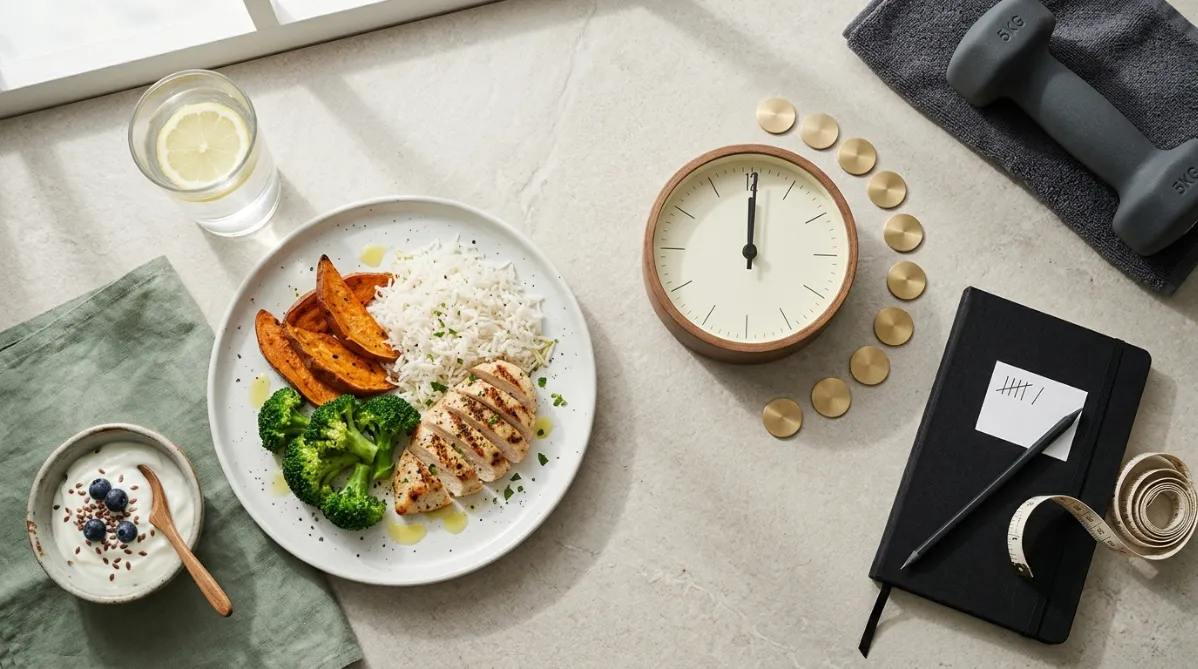
A wide, editorial-style flat lay photographed from above on a pale warm-gray stone surface, bathed in soft natural window light with gentle diagonal shadows. On the left side, a minimalist matte white ceramic plate holds a balanced bulking meal: sliced grilled chicken breast, a mound of fluffy basmati rice, roasted sweet potato wedges, and bright green broccoli, with a drizzle of olive oil glistening. Beside it sits a tall glass of water with a lemon slice and a small bowl of Greek yogurt topped with blueberries. On the right side, a round analog clock face is subtly placed, or a simple wooden clock with a minimalist design, its hands marking noon, with a soft arc of eight small brushed-brass discs arranged in a curved line beside it, suggesting an eight-hour eating window. A sleek black notebook with a pencil rests nearby, with a few hand-drawn tally marks and a tape measure loosely coiled next to it. A single dumbbell with a matte charcoal finish sits at the top right edge, partially cropped, hinting at strength training. The color palette is muted and sophisticated: sage green, warm cream, terracotta, soft charcoal, and touches of brass. Generous negative space on the right third for title text overlay. Shallow depth of field with crisp focus on the plate, subtle film grain, and a calm, modern wellness-magazine aesthetic reminiscent of contemporary health and fitness journals. Clean composition, natural textures like linen napkin and speckled ceramic, and no people or text visible.
nutrition

Digiuno 16:8 durante il bulk: stessa massa muscolare, meno della metà del grasso accumulato

BY DR. GYMBRO ·

I sollevatori che hanno concentrato il loro bulk in una finestra di 8 ore hanno guadagnato la stessa quantità di muscolo e forza dei soggetti che hanno mangiato normalmente, ma con meno della metà del grasso in più. La sorpresa è che il digiuno non è stato la magia: il gruppo 16:8 ha semplicemente ingerito meno calorie rispetto al surplus previsto, con conseguente riduzione di proteine e carboidrati. Questo studio randomizzato di 12 settimane suggerisce che il mangiare a tempo limitato sia uno strumento di aderenza per un bulk più magro, non un trucco metabolico. Di seguito i dati, il target proteico raggiunto e a chi può interessare.
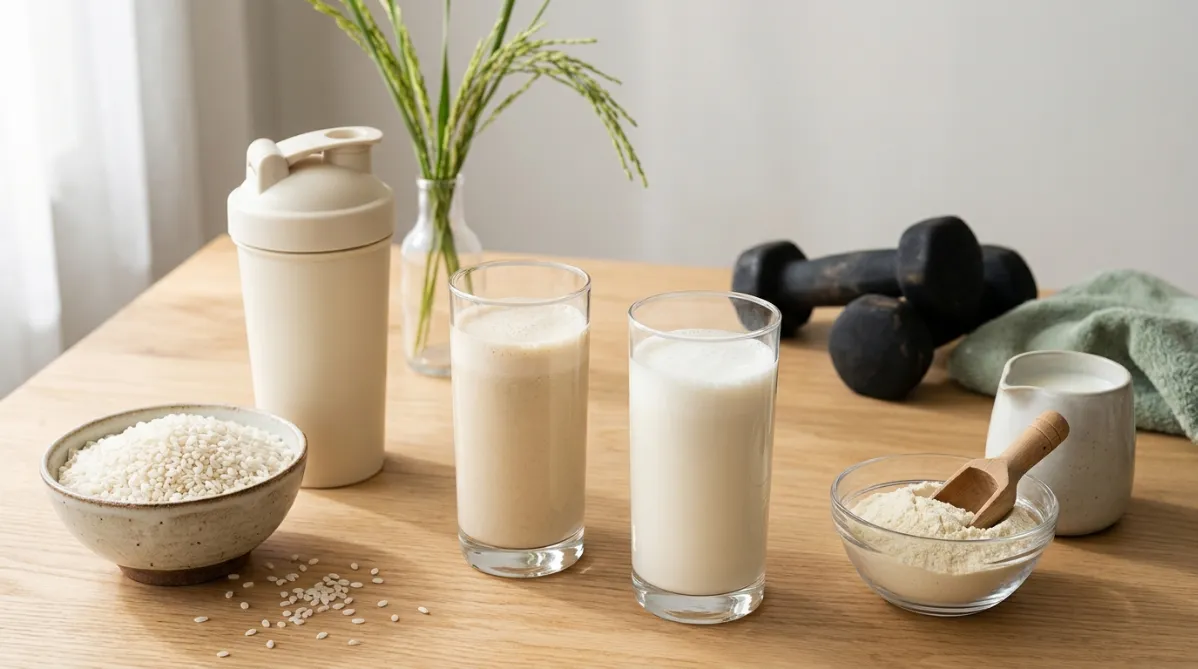
A bright, minimalist editorial still life on a pale oak table, shot from a slightly elevated three-quarter angle in soft natural window light. On the left sits a rustic ceramic bowl of uncooked short-grain white rice, with a few grains scattered across the wood. Beside it is a matte cream-colored shaker bottle. On the right is a small glass bowl of fine ivory whey powder with a wooden scoop resting in it, and a small pitcher of milk behind it. Two identical tall glasses of creamy, lightly frothed shake stand side by side in the center, one a touch warmer beige and the other a soft white. They suggest equal outcomes without any text or labels. A pair of worn black neoprene-coated dumbbells and a folded sage-green gym towel sit slightly out of focus in the background. A sprig of green rice stalks in a slim vase adds a fresh, natural accent.

The palette is warm neutrals: cream, oatmeal, soft sage, and muted terracotta, with gentle shadows and a shallow depth of field. The surface has subtle grain, and fine powder dust is caught in the light. The composition is clean and balanced, with generous negative space on the upper right for a headline overlay. The mood is calm, modern, and health-forward, like a contemporary nutrition magazine or wellness journal. Photorealistic, crisp detail, creamy bokeh, and a gentle matte film-like finish.
nutrition

48 g di Proteine di Riso e Whey per Muscolo e Forza in 8 Settimane

BY DR. GYMBRO ·

Molti credono che le proteine vegetali siano inferiori al siero di latte, ma uno studio del 2013 su uomini allenati ha dimostrato il contrario quando si assume una dose molto elevata. In 24 soggetti allenati alla resistenza, 48 g di isolato di proteine di riso assunti dopo l’allenamento hanno prodotto gli stessi guadagni in massa magra, spessore muscolare, forza e potenza di 48 g di isolato di whey in otto settimane. Perché il riso è riuscito a stare al pari? Probabilmente la grande dose ha colmato il divario di leucina. Di seguito trovi i risultati, i limiti dello studio e come gli sportivi vegani o intolleranti al lattosio possano sfruttarlo.
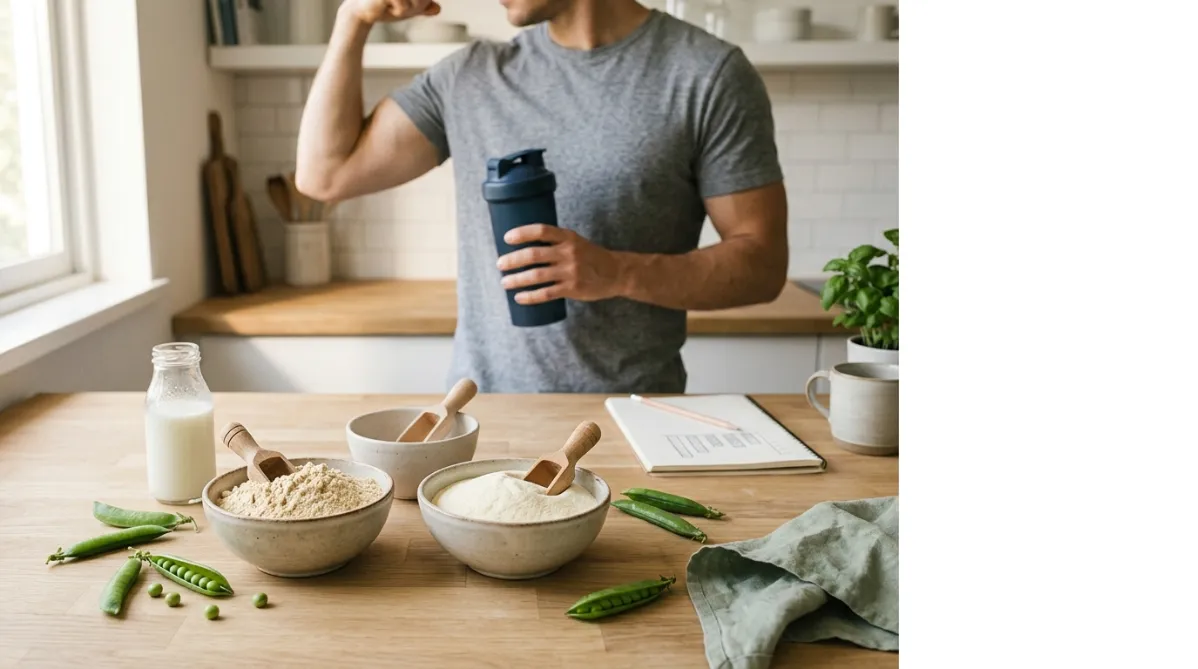
A bright, airy, minimalist kitchen counter in soft morning light, shot from a slightly elevated three-quarter angle in a wide landscape composition. Two matching ceramic bowls sit side by side on a pale oak butcher-block surface. The left bowl holds fine, creamy-beige pea protein powder with a small wooden scoop resting in it. The right bowl holds smooth, ivory-white whey powder with an identical scoop. Between and slightly behind them sits a third, smaller empty bowl with a plain scoop, hinting at the placebo. Scattered around the bowls are fresh green pea pods, some split open to reveal bright, round peas, and a small glass bottle of milk with delicate condensation. A sage-green linen napkin is folded loosely at the edge of the frame.

In the soft-focus background, a young man in a fitted heather-gray t-shirt is seen from the shoulders down, casually flexing one arm while holding a matte shaker bottle, the biceps subtly defined and the pose relaxed and natural. A minimalist notebook with a pencil and a simple hand-drawn bar chart lies open on the counter, suggesting analysis without legible text. A small potted herb plant and a ceramic mug add warmth.

The color palette is muted and editorial: warm cream, sage green, soft terracotta, pale wood, and touches of charcoal. Light streams in from a window on the left, casting gentle long shadows and a subtle golden glow across the powders so their textures look fine and tactile. Shallow depth of field keeps the bowls crisp while the background melts into a creamy blur. The look is modern lifestyle-magazine photography, clean and uncluttered, with generous negative space on the right third of the frame for headline overlay. It is natural, appetizing, and trustworthy, in the style of a contemporary wellness and nutrition journal.
nutrition

Proteine di pisello vs siero: il risultato sorprendente per i principianti

BY DR. GYMBRO ·

Può una proteina vegetale costruire muscoli così bene come il siero? Un trial di 12 settimane su 161 uomini ha messo a confronto proteina di pisello, siero e placebo; i risultati per i principianti hanno stupito: +20,2 % di spessore del bicipite per il pisello contro +8,6 % per il placebo. Tuttavia, la differenza complessiva tra i gruppi è stata solo una tendenza; il risultato più importante è emerso dall’analisi di sottogruppo. Scopriamo cosa ha dimostrato lo studio, cosa non ha provato e come gli atleti vegani o intolleranti al lattosio possono usarlo.
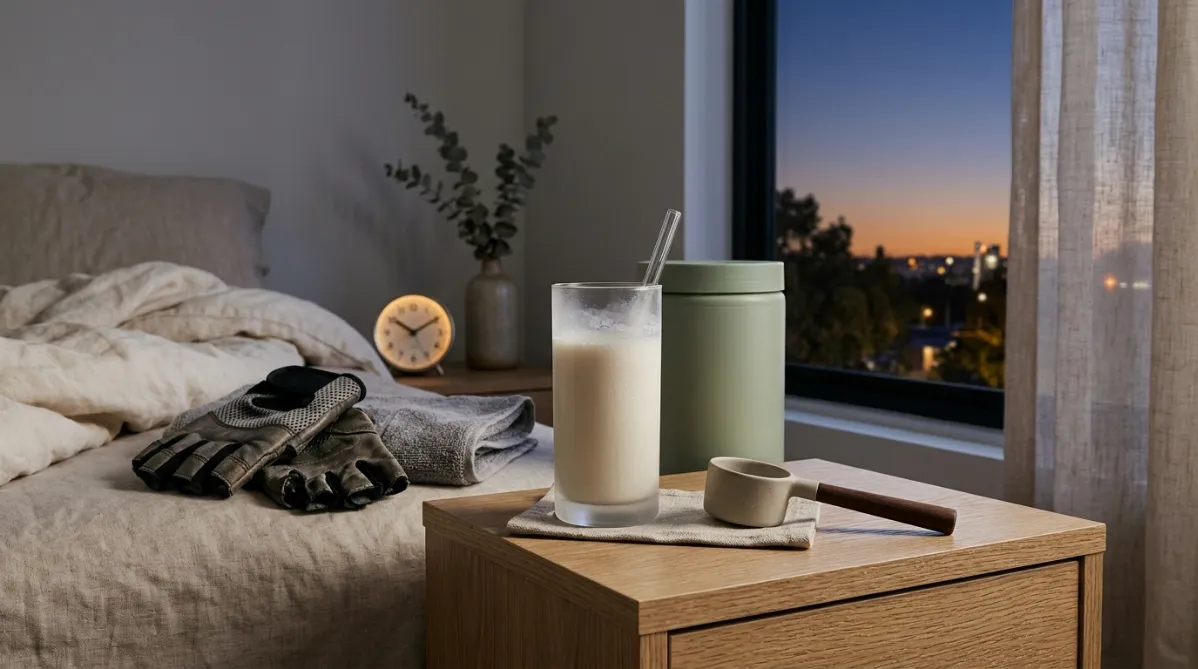
A quiet bedside scene at dusk, shot in soft natural light with a shallow depth of field. A tall frosted glass of creamy, pale-white shake sits on a light oak nightstand, with a thin film of condensation on the glass and a faint milky residue near the rim. Beside it, a matte ceramic scoop rests on a small linen coaster. A minimalist tub of unbranded protein powder in muted sage green sits slightly out of focus in the background.

To the left, a neatly made bed with oatmeal-colored linen sheets and a rumpled cream duvet. A pair of worn lifting gloves and a folded gray gym towel sit on the edge of the bed, suggesting an evening workout just finished. A small analog alarm clock reads about 10:30 PM, its soft face glowing faintly. A sprig of dried eucalyptus in a small stoneware bud vase adds an organic touch.

Through a large window on the right, deep indigo twilight fades into a warm amber horizon, and the last light spills across the wall in long, gentle gradients. A sheer curtain moves slightly. The palette is warm neutrals (cream, oak, sand, soft terracotta) with a few muted blue-violet accents from the evening sky.

The composition uses the rule of thirds, with the glass at the left-center foreground and generous negative space on the right, where headline text could sit. The mood is calm, restorative, and editorial, like a modern wellness and nutrition journal. The lighting is gentle and diffused, with subtle film grain and slightly lifted shadows. The textures of linen, wood, glass, and ceramic are crisp. The image is clean and uncluttered, with no text, logos, or people, and no futuristic or sci-fi elements.
nutrition

Lo shake da 40 g prima di dormire: cosa fa la caseina pre‑sonno durante la notte

BY DR. GYMBRO ·

Allenarsi di sera e poi passare otto ore senza mangiare: questo ostacola il recupero? Uno studio del 2012 ha somministrato a 16 giovani uomini 40 g di caseina 30 minuti prima di andare a dormire, monitorando cosa accadeva durante la notte. La proteina è stata digerita e assorbita, la sintesi proteica dell’intero corpo è aumentata (311 vs 246 µmol/kg) e il bilancio proteico netto è passato da negativo a positivo. La sintesi proteica muscolare è risultata circa il 22 % più alta, sebbene con una significatività marginale. Scopri cosa indicano questi risultati, cosa non dimostrano e come usarli.
A wide landscape editorial photograph of a sunlit minimalist gym corner with warm, natural morning light streaming through tall windows. In the foreground on a light oak wooden bench sits a small matte ceramic dish holding a few translucent amber softgel capsules, next to a brushed steel shaker bottle and a folded charcoal gray towel. The capsules catch the light with a soft golden glow, shallow depth of field blurring them slightly against the background.

In the softly blurred midground, a barbell loaded with black plates rests on a squat rack, with chalk dust lightly floating in the sunbeams. The walls are textured off-white plaster, and the floor is pale polished concrete. A potted green plant adds a touch of organic color near the window.

Laid casually beside the dish is an open notebook with a clean, hand-drawn bar chart in black ink: two bars of slightly different heights, one marked with a small question mark, suggesting uncertainty and interpretation. A slim pencil rests across the page. No readable text beyond simple marks.

The color palette is muted and modern: cream, warm beige, soft amber, charcoal, and sage green accents. The composition follows the rule of thirds, with the capsules and notebook in the lower left third and open negative space toward the upper right, ideal for headline overlay. Soft shadows, subtle film grain, and a calm, contemplative mood reminiscent of a contemporary health and science magazine. Shot as if with a 50mm lens at f/2.0, high-end lifestyle editorial aesthetic, clean and trendy, with no futuristic or sci-fi elements.
science research

750 mg di PA aumentano la massa magra del 2,6 % in 8 settimane – ma c’è un aggancio

BY DR. GYMBRO ·

Un piccolo studio ha scoperto che uomini allenati che hanno assunto 750 mg di acido fosfatidico al giorno hanno guadagnato il 2,6 % di massa magra in otto settimane, mentre il gruppo placebo ha accumulato solo lo 0,1 %. La forza nello squat è aumentata maggiormente con il PA (12,7 % contro 9,3 %). Tuttavia, l'analisi convenzionale degli autori non ha rilevato differenze significative. Le loro conclusioni si basano su un metodo statistico più permissivo e su un campione di soli 16 uomini. Ecco il dosaggio, i risultati e perché questo studio pilota è più un segnale promettente che una prova definitiva.
A wide editorial still life on a pale sage-green seamless backdrop, shot from a slightly elevated angle in soft, diffused natural window light. On the left, a loose heap of fresh spinach leaves with deep emerald color and visible veining, a few leaves curling toward the camera with tiny droplets of water catching the light. Beside the leaves sits a minimalist amber glass supplement bottle with a plain cream label, its cap off, and a small scatter of off-white capsules spilling onto a matte ceramic plate. At the center-right of the frame, a polished steel barbell plate stands on its edge, partly in soft focus, suggesting strength training without cluttering the scene. In the foreground, a clean, slightly weathered wooden lab-style tray holds a slim stainless steel measuring tape coiled loosely and a folded paper with a faint abstract molecular line drawing, kept subtle and out of focus. A single red wax-style seal stamp lies near the edge of the arrangement, hinting at "ban" and regulation, with a small imprint half visible on the backdrop. The palette is restrained and modern: sage green, warm cream, soft amber, brushed steel gray, and one small accent of deep red. Shadows are gentle and elongated, falling to the right. Shallow depth of field, crisp focus on the spinach and capsules, a subtle film-like grain, and generous negative space on the right third of the frame for headline overlay. The overall feel is a contemporary health and science magazine cover: clean, tactile, quietly tense, and sophisticated, with no people, no text, and no futuristic elements.
nutrition

Ecdisterone, l’anabolico degli spinaci: 46 uomini, 10 settimane, si consiglia il divieto

BY DR. GYMBRO ·

Un “anabolico naturale” presente negli spinaci ha appena ricevuto il sigillo di efficacia dalla WADA, accompagnato da una raccomandazione di divieto. In una prova di 10 settimane su 46 giovani uomini, l’integrazione di ecdisterone è stata associata a guadagni significativamente superiori di massa muscolare e di 1RM nella panca, senza aumenti dei marcatori di tossicità epatica o renale. Il meccanismo proposto passa per il recettore estrogenico, non per quello androgeno. Chi è interessato alla turkesterone deve capire cosa dimostra (e cosa non dimostra) questo studio limitato e perché gli sportivi soggetti a test dovrebbero essere cauti.
A wide editorial still life on a pale, warm-gray stone surface lit by soft morning window light from the left. In the foreground, a rustic ceramic bowl in matte oatmeal glaze holds dried ashwagandha roots, pale tan and gnarled, with a few scattered beside it. A small wooden scoop dusted with fine golden-beige powder rests next to the bowl. Behind them, a few olive-green ashwagandha sprigs with small orange-red berries in papery husks arc across the frame, adding a quiet pop of color.

Midground right: a matte black chalk-dusted dumbbell handle and a single brushed-steel weight plate lean casually against a linen-textured backdrop in muted sage. A folded cream cotton towel and a slim notebook with a pencil suggest a training log. The notebook is open to blank, softly lined pages with no legible text.

The background fades into a gentle blur of neutral beige and soft terracotta tones, with a hint of a plant shadow cast across the wall in dappled light. Fine dust and powder particles float in the light beams, giving a tactile, organic feel.

The composition follows the rule of thirds: botanical elements on the left and center, gym elements on the right, and negative space in the upper right for headline overlay. Shallow depth of field, crisp focus on the roots and powder, creamy bokeh behind. Color palette: sage green, warm sand, terracotta, charcoal black, and a touch of burnt orange. The mood is calm, modern, and trustworthy, like a premium wellness and science magazine. Photographed on a 50mm lens, natural grain, subtle film-like contrast, clean minimalist styling, high-end editorial photography.
nutrition

L’erba antica che ha superato il placebo in una prova di sollevamento di 8 settimane: forza, massa muscolare e testosterone

BY DR. GYMBRO ·

Potrebbe una radice ayurvedica secolare battere davvero un placebo? In una prova randomizzata di 8 settimane su 57 principianti, gli uomini che hanno assunto 300 mg di estratto di ashwagandha due volte al giorno hanno migliorato la panca, aumentato le misure di braccio e petto e registrato un più marcato incremento del testosterone rispetto al gruppo placebo, perdendo anche più grasso corporeo. Lo studio, però, è piccolo, di breve durata e limitato a uomini alle prime armi. Ecco i dati, il dosaggio, chi potrebbe trarne beneficio e perché è bene restare scettici.
A wide, editorial flat-lay photograph shot from directly above on a pale warm-gray stone countertop, lit by soft natural morning window light with gentle diagonal shadows. On the left, a neatly arranged cluster of whole-food protein sources: two seared chicken breast slices with a golden crust, a small ceramic bowl of creamy Greek yogurt topped with blueberries, three halved soft-boiled eggs with jammy orange yolks, a handful of raw almonds, and a small pile of dried lentils scattered on a linen napkin. At the center, a matte white shaker bottle and a wooden scoop resting in a pile of fine vanilla-colored protein powder, a few grains dusted artfully across the surface. On the right, a minimalist kitchen scale in matte black displaying a portion of food, next to an open notebook with a hand-drawn curve that rises steeply and then flattens into a plateau, drawn in a deep terracotta ink pen, with a small dot marking the bend. A brass pen lies beside the notebook. A single dumbbell with a brushed steel finish sits partially in frame at the upper right corner, grounding the fitness theme without feeling gym-like. Color palette: warm cream, sage green, terracotta, soft charcoal, and butter yellow accents, with generous negative space along the top edge for title overlay. Shallow depth of field, crisp textures, subtle film grain, modern lifestyle magazine aesthetic, clean and calm composition, 16:9 landscape.
nutrition

Quanta proteina massimizza realmente i muscoli? Il plateau di 1,6 g/kg spiegato

BY DR. GYMBRO ·

Pensavi di aver bisogno di più di 2 g di proteina per libbra per crescere? Una meta‑analisi su 49 studi e 1.863 adulti ha mostrato che i benefici per l’aumento muscolare si stabilizzano intorno a 1,6 g/kg al giorno. Il limite superiore dell’intervallo di confidenza arriva a circa 2,2 g/kg, offrendo ai sollevatori una gamma pratica invece di una dose arbitrariamente enorme. Gli atleti già allenati traggono il massimo dal supplemento, mentre il beneficio diminuisce con l’età. Ecco cosa significano i numeri per il tuo piatto, il tuo shaker e il tuo portafoglio.

This page is available in